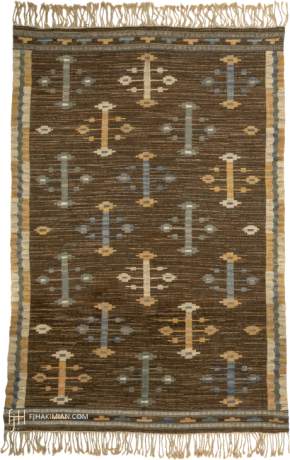

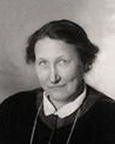
Märta Måås-Fjetterström (1873-1941)
Classic, timeless and pure; such was Märta Måås-Fjetterström the woman and her art, the artistically expressive tapestries and rugs that define and epitomize the Swedish textile ideal. Born in 1873 in the south of Sweden, she initially had planned to illustrate books, but when she began to send highly profound cartoons of tapestries to the Museum of Historical Culture it was clear her genius was to be found elsewhere. She gained recognition as an artist in 1909 when she created a series of works, all exhibited in premier museums and galleries. She was then asked to design the rugs used in the Nobel Prize ceremonies because of the universal appeal and support of her work. Ten years later Måås-Fjetterström set up her workshop with a few handloom weavers in Bastad. From her study at this resort town, she enjoyed an expansive view of the wide, tranquil Laholm Bay, and grew all her favorite flowers in her cherished garden.
In this atmosphere of genuine peace and freedom, Märta Måås-Fjetterström created textile art that transformed the world into ornamemtal art without losing any of its innate vitality. Her pieces are clearly inspired by nature. Although graphic in style, the motifs are taken from the natural world with colors as complex and changeable as nature itself. Indeed you can almost smell the plants and the damp soil and yet every flower has become a strictly ornamental, personal design with its own function in the total composition.
Her diligence, creative energy and enthusiasm, present throughout the entire 22 years she ran her workshop before her death are best illustrated by more than the 600 designs, sketches, and woven patterns she left for the world to enjoy. Her compositions range from heavy-pile carpets, hooked rugs and kilim rugs –works of art, all of which were rooted in the deep Nordic cultural traditions inspired by Scandinavian nature and woven by young girls whose hands were graced with weaving traditions passed down through many generations.
*Pieces were signed either “MMF,” if produced during Märta Måås-Fjetterström's lifetime, or “AB MMF,” for those made after her death in 1941.
Read more: our blog "THE HOUSE THAT MӒRTA BUILT…."
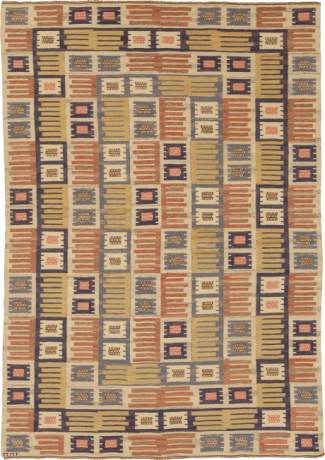
02706
Swedish Flat Weave
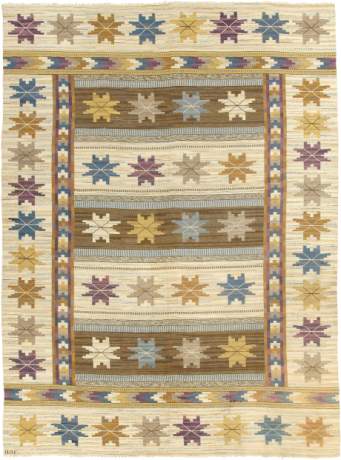
02895
Swedish Flat Weave
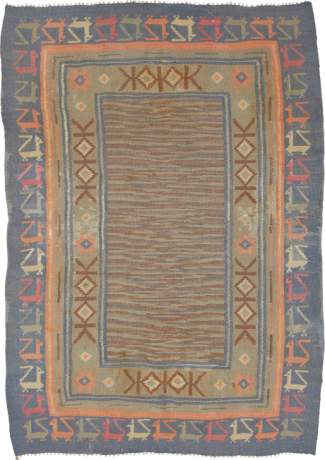
02931
Swedish Flat Weave
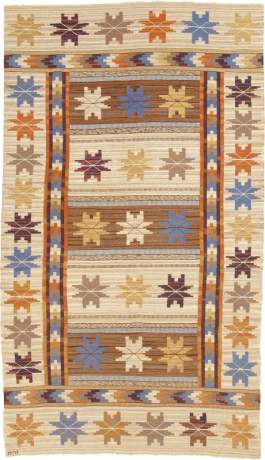
02962
Swedish Flat Weave
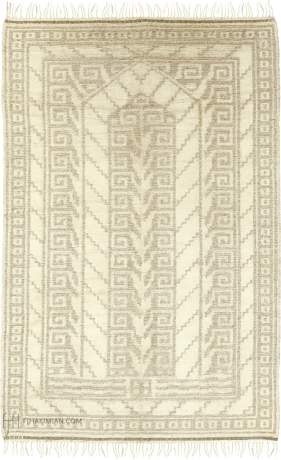
03339
Swedish Pile
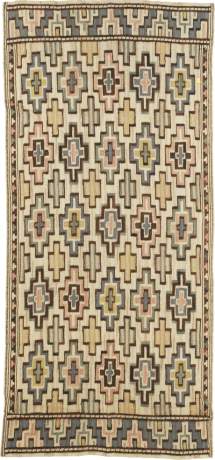
02828
Swedish Wall Hanging
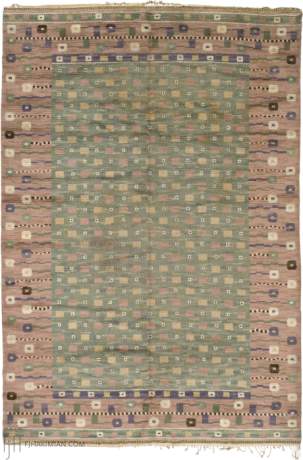
03156
Swedish Pile
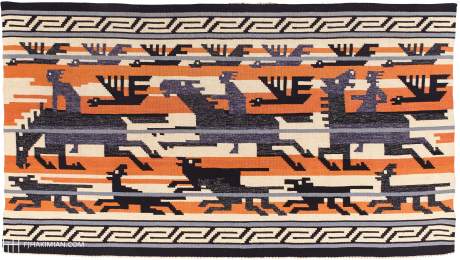
22266
Swedish Tapestry
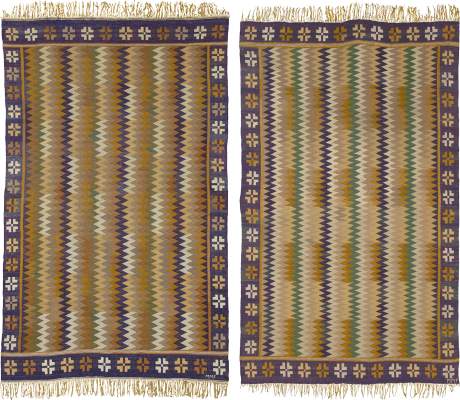
02767 & 02807
Swedish Flat Weave
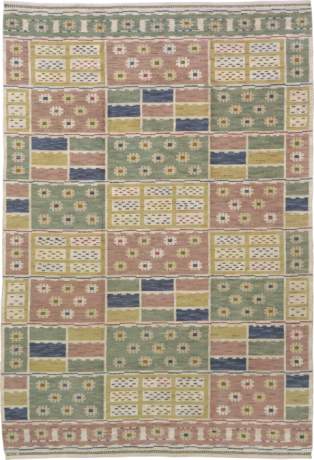
03192
Swedish Pile
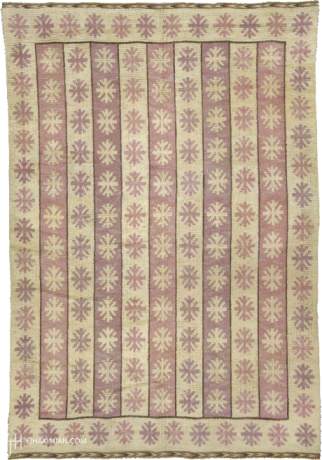
03247
Swedish Pile
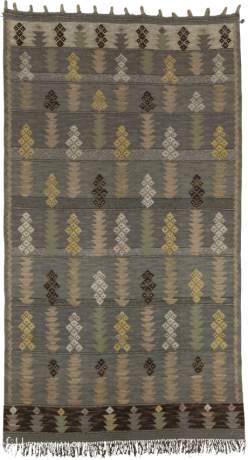
02772
Swedish Wall Hanging